Hi Lauren, Excellent description and play on color – you write about the artwork in such an euphoric and nostalgic sense, not to mention the way in which you personified the land ‘so desperately wanting to be appreciated.’ You’ve definitely initiated this post in a poetry and prose sense – I thought the line ‘Swirling in the iris’ of the viewer, of us’ was a clever way to unify and artists intention with the observer. Well done and best of luck with your future blogs.
There are various creative outlets in which a person can showcase their insights of their personal experience and the world around them. Art and Literature are two different and distinct examples of this. For literature, it welcomes people to stay in touch with their emotions through words and literary techniques. Words have the power to move an individual greatly, as it’s the universal way in which a lot of us communicate. In saying this, Art showcases a visual form in which meaning can be communicated. Using different mediums such as oil paintings or installations show unconventional ways of communicating emotions or experience. Something to take note of when describing the purposes of both Art and Literature is that they’re both entail a high degree of creativity and have the ability to project different meanings to different people. Both forms can be taken subjectively, inviting more than one perspective to be projected onto them.
We often forget that every individual has a different and unique configuration of their psyche. No two minds are the same, nor can they have the same processing mechanisms. When an author writes, they’re very much aware that the work they produce may have several different meanings in comparison to the one it was intended for. I personally see more individuality in the literary form of poetry, due to the open ended structure it usually carries. The same applies for Art; an artists intention of producing work is for the viewer to find their own meaning, based off different aspects of the medium they may be viewing. What does this mean for a Person’s Experience?
Whether you’re walking through an art gallery or a bookstore, usually an individual’s intention is to immerse themselves with the stories and feelings of others. We often do this because it reassures us that we’re very much in touch with our emotions and memories; not alone in our thoughts. Both Art and Literature show a deeper perspective of life, sometimes displaying an augmented reality which cannot be tangible. It opens the flood gates of feelings, allowing oneself to be immersed in a whole new realm of emotion and thought. Although we don’t know authors and artists personally, it is something about the way in which they represent their work that makes it feel so personal to us. We as the readers and viewers draw onto our own personal experiences and create an appetite of closeness to someone else’s story. In essence, it’s a moving experience to read or analyse something that has no attachments to your life, and yet you can read in-between the lines, pull apart at the words or color choices and reveal a connection to your life.
Both Art and Literature are two surreal ways of unifying individuals within society. Although two different means of communicating, they both can make experiences so personal and yet have a sense of togetherness with the wider community. Time cannot alter the affects of Art and Literature, as they’ve been around for centuries and prove to touch the personal lives of spectators for years to come.
Hi Isabella, Lucky you – you’re my first peer review! Firstly, love the fact that you chose a creative blog post to indulge in, art most definitely has a soft spot in my heart. Your depiction of Ned Kelly and the paradox of hero vs criminal is exceptional, it’s evident that you’ve put a lot of thought into it’s historical context. I admire the fact that you’ve acknowledged Nolan’s contribution to Australian Literature/ Art, as his paintings – specifically this one – left the impression of Kelly being Australia’s ‘Legend’. To my surprise, I actually learnt a lot more about ned kelly in your blog post than I ever did in primary school E.g. never fully grasping the concept that he is one of the first most imperative figures to break away from British constructs, and emphasise ‘what it means to be Australian’ on an individualistic level. In addition, your sentence structure is configured beautifully. Great effort.
For how long can I glare at the void of blue light perched upon my lap. They say that the adolescent mind is an advocate of hyperconsciousness, but all I am conscious of is the interior monologue thats conjured from these small devices. Outside, Autumn seamlessly fades into winter – it’s transition almost as invisible as our sense of compassion, care or empathy. The mere act of stepping outside into the social realm is equivalent to a death wish, heaven forbid Eve for being ever so curious! For Generation Z shall be condemned if appearing to show interest in foreign affairs external to their social spheres driven by self indulgence and exploitation. None of it is real, for the apps we flicker across are attached to inanimate objects – they don’t have a heart and soul as we do. Yet, here we are, constantly linking meaning to words and pictures of complete absurdity and self absorption. If Henry Lawson were to be of cynical character in the 19th Century, just imagine if he were born to witness us in this day of age.
Hi all, here’s my take on 21st Century prose, attempting to interweave Lawson’s Humanist views and pessimism. Without giving too much of an overview, as prose should be accompanied with different views, I picked a subject matter that was easy to be spiteful and realistic about as Lawson did this impeccably well back in his day. Prose can incorporate lengthy paragraphs, but for my first attempt I kept the snapshot of the subject matter short and tried to not be too technical (although, as you can tell, I can’t help it).
Would definitely love some feedback/ comments. Enjoy and happy blogging!
Everyone has special places, whether they’re big or small, entailed with huge significance or not. This creative question implies that we as bloggers have to take a more personal approach to our writing, attaching our significant places with memories that enlighten us with the reasons why we’d hate to see them destroyed.
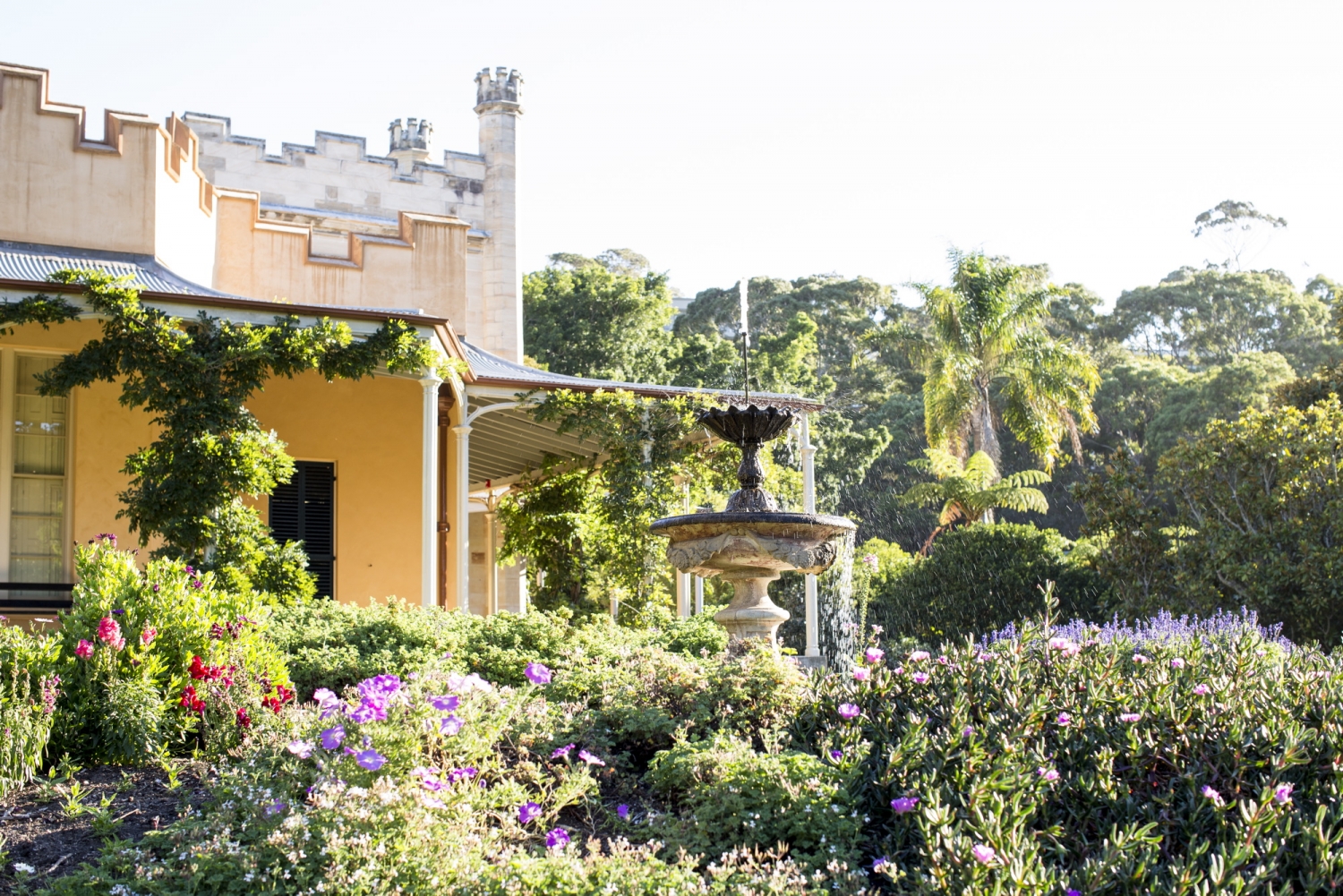
Growing up as a student in primary school, I didn’t pay attention to much – this includes all the excursions I went on. Though, in saying this, there was one excursion that I attended in year 5 that I still carry with such significance. Vaucluse House is a heritage listed site thats perched high in the valley of Vaucluse. It’s existence has been around since the 1820’s, and is encompassed by Australia’s compelling flora and fauna. One would describe the site as etherial – it’s almost as if the property and the geological surroundings are encased in another time frame with none of it’s original architecture disorientated. But, I didn’t fall in love with the site due to it’s historical context or mansion-like features – it holds great significance to me because of the memories I had with my best friends there. We’d laugh and point at the silliest of things, like how the property had a farm attached to it with chickens running about, or finding a secret doorway and breaking off from the group to play hide and seek. We as a class went their with the intention of gaining some knowledge about the early landscape of Australia and it’s British occupants, only to come home with stories that can be told years later, and we’d all still laugh with the same vibrancy as our 10 year old selves.
“Sir Henry built a pretty little cottage … upon which the house of Mr. William Charles Wentworth now stands. There is not a lovelier site in the known world … Travel where you will the eye will not rest upon any spot more favoured by Nature than that exquisite valley which was called Vaucluse. ” – John Lang (Novelist), 1859 pp489-90.”
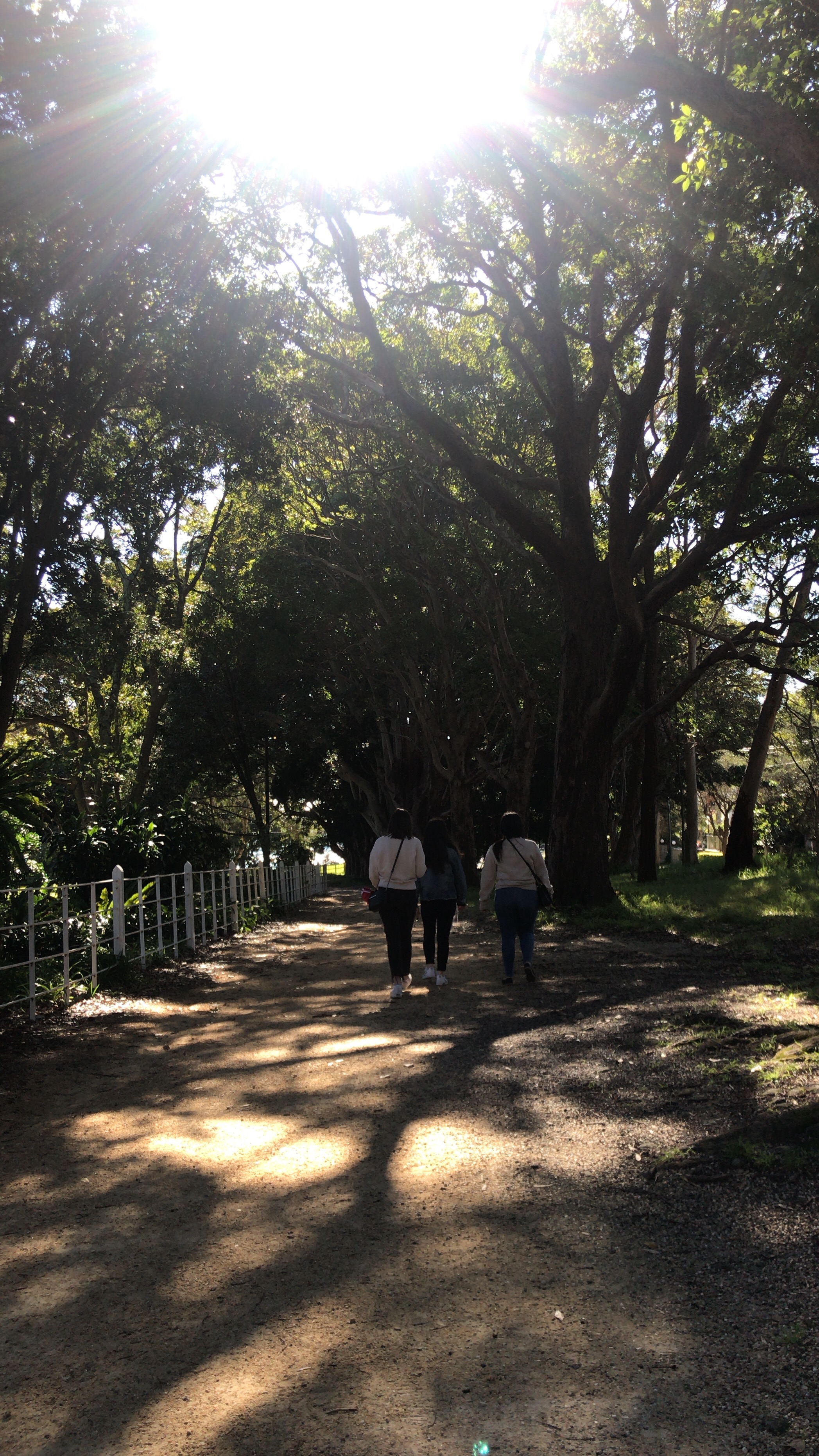
Fast forward to 2019, 9 whole years since that expedition, and I’m still close friends with the same group of girls. We meet up often to do simple catch ups like lunch or the movies, but to my surprise, one of my friends mentioned we take a road trip to Vaucluse House, and that’s exactly what I did last holidays. There was something nostalgic about driving my friends in my car and blasting Hot Chelle Rae’s ‘Tonight Tonight’ and other 2000’s music we’d bob to at school disco’s. The whole day was like seeing a series of vignettes from the past. When we arrived at the site, I can’t even begin to explain how memories came flooding back – only this time was different. We were all grown up now and realised that this place had more depth to it than we paid attention to. It’s ironic that in Australian Literature that we study writers of the 1800’s and their social contexts, because that’s exactly what my friends and I did that day in relation to Vaucluse House.
The site was purchased by explorer, barrister and writer William Wentworth, to whom was the son of both a convict mother and father. With this stigma following him around like a rain cloud above his head, he met his wife Sarah Cox, to which was also the offspring of convicts. The two would then start a family which consisted of 10 children, and so the Vaucluse House was birthed. The site is infamous for its absurd architecture, as it was built and designed to cater for 10 children, numerous amounts of servants, farmers and nurses. The property also includes 515 acres of parkland, orchards, vineyards and features a small (but brilliant) water fall that trickles water into the back of the venue. It’s definitely a place that I would recommend everyone to visit. With out trip coming to a close again, it was nice to look back on all the memories we had as kids and to see ourselves evolve into curious and studious young adults. I’d be disheartened to hear if this site was ever demolished, but since it’s Heritage listed, I have a feeling I’ll get another trip or two out of it before it goes anywhere.
 Creative, Critical & Everything In between